


Meeting Reviews
CCAS 2017 Annual Meeting Review: Afternoon Sessions
By Stephanie Schock, MD
The afternoon sessions started with recognition of Dr. Dolly D. Hansen, "the Mother of Pediatric Cardiac Anesthesia", who devoted her entire career at Boston Children’s Hospital to the life of children with congenital heart disease. To honor Dolly's remarkable career and fulfill her wishes, the Dr. Dolly D. Hansen Educational Fund has been established. This Fund is intended to serve the educational mission of the Congenital Cardiac Anesthesia Society. Those wishing to donate can do so here.
Dr. Mark Twite announced the 7th World Congress of Pediatric Cardiology and Cardiac Surgery (WCPCCS), which will take place on July 16 - 21, 2017, in Barcelona. For the first time there will be an anesthesia track at this meeting, as well as joint anesthesia sessions with the cardiac surgeons and intensivists with a focus on “binding together”. The top five abstracts submitted to CCAS this meeting, including the three oral presenters below, will be sponsored for oral presentation at WCPCCS this summer.
The three abstract winners then presented their oral presentations:
Session IV: Selected Abstracts for Oral Presentation
Moderator: Michael Mazurek, MD (Riley Hospital, Indianapolis)
Rebecca Scholl, MD (Duke University Hospital), started the selected abstracts for oral presentation by discussing her placebo-controlled trial comparing the effects of anti-thrombin (ATIII) administration versus placebo on the coagulation system in infants undergoing congenital cardiac surgery.
Infants are at risk for anti-thrombin deficiency, which may impact intraoperative coagulation management. The department at Duke performed a randomized double blind control trial that compared treatment with exogenous ATIII to achieve levels of 100% vs placebo with varying levels of baseline ATIII. There was no significant difference in age, gender, weight, baseline activated clotting time (ACT) or heparin doses intraoperatively. The study took seven blood samples:
- Prior to operating room,
- after heparin administration,
- on cardiopulmonary bypass (CPB),
- off CPB,
- in intensive care unit (ICU),
- post-operative day (POD) 2 and 7) POD 4.
Dr. Scholl stated that although it is known that neonates have a decreased level of ATIII and an increased resistance to heparin, it is unknown if normalization of ATIII levels to 100% pre-CPB will improve outcome. Thirty percent of screened patients had AT levels <70%.
Intraoperatively, the treatment group showed improved anticoagulation based on ACT during bypass and decreased total heparin dosing with no increased rates of intraoperative bleeding or total operative time. Post-operatively, the treatment group had increased ATIII levels into the ICU stay; however, both groups showed less than 70% of baseline values on day two and four. It was noted that the biological half life of ATIII is 2-3 days. The placebo group had increased clotting and exposure to blood products. Total blood unit exposure was six units in the treatment group versus 19 units in the placebo group.
The study concluded that replacement of ATIII improves anticoagulation during CPB without increased rates of bleeding or adverse events. The results further suggest extension of these beneficial effects into the postoperative period, reflected by significantly less postoperative bleeding and transfusions and generation of D-Dimers. They conclude that treatment of low ATIII levels with exogenous ATIII is helpful in infants undergoing cardiac surgery on CPB.
During the Q&A it was asked if Dr. Scholl recommend screening all infants prior to cardiac surgery. At Duke they do screen ATIII levels in children less than seven months old and will order and replace if less than 70% prior to surgery. Another question arose regarding plans for FFP administration with decreased ATIII levels in selected patients. It was discussed that the volume load would depend on the patient’s weight and the preoperative AT III level. To achieve therapeutic ACT levels on bypass more heparin is typically administered, followed by FFP. When discussing difference of fibrinogen fraction in cryoprecipitate vs PTC, stated they are using cryoprecipitate to replace fibrinogen at Duke.
Michelle DaCosta, MD (Emory University School of Medicine, Children’s Healthcare of Atlanta) followed by presenting a prospective observational study looking at baseline MA-FF, FLEV, and Clauss based assays of fibrinogen levels in neonates, infants and children with congenital heart defects. The study included 45 patients separated into six age groups (less than 30 days, 1-3 months, 3-6 months, 6-12 months, 12-24 months and greater than 24 months). Restoring fibrinogen helps control bleeding in young children after CPB. Sending a fibrinogen level to the lab takes time (45 minutes to one hour) and the ability to rapidly measure fibrinogen for coagulopathy management and correlation to the FLEV thromboelastographic functional fibrinogen would likely help guide appropriate therapy.
In conclusion, this preliminary study establishes reference ranges for MA-FF and FLEV values in six age groups of children. In neonates and infants <6 months WB-derived MA-FF or FLEV values were higher and did not correlate with plasma-derived Clauss fibrinogen levels, whereas they demonstrated correlation for FLEV with Clauss method only >6 months of age. TEG values may be more useful when making clinical decision in young infants. During the Q&A, Dr. DaCosta pointed out it is important to remember that fetal fibrinogen is structurally different than adult fibrinogen.
Jonathan Meserve, MD (Boston Children’s Hospital) then discussed sedative medication sequestration of modern extracorporeal membrane oxygenation (ECMO) circulators. Sedation on ECMO is a known challenge due to variable drug absorption within the circuit itself and can be correlated to the lipophilicity of various drugs. Traditional PVC tubing has evolved to include heparin or other glycoprotein coating. The goal of the study was to describe which drugs may have an affinity for sequestration and what options are available.
The study used a closed loop system and a priming solution similar to in-vivo with controlled total volumes. The ECMO circuits were P.h.i.s.i.o coated PVC tubing and Quadrox-iD pediatric polymethylpentane membrane oxygenator along with a revolution centrifugal pump with typical priming solutions (blood product, heparin, albumin, bicarbonate, calcium). Drugs were administered, and drug concentration samples were drawn at numerous time intervals. Results showed that midazolam is the most heavily absorbed, reaching steady state levels very quickly within one to two hours, followed by fentanyl. Dexmedetomidine levels decreased by approximately 30% in a gradual decline. Morphine, the most hydrophilic drug, showed unchanged absorption rates.
In conclusion, lipophilic drugs are sequestered very quickly in the new ECMO circuits as expected, which may help guide in-vivo therapy of patients on ECMO. The possible sequestration of fentanyl, midazolam and dexmedetomidine in ECMO circuits may limit drug delivery to patients.
There are some limitations to the ex-vivo study. Ex-vivo studies do not take into account changes in patient’s pharmacokinetics. There are also differences in drug metabolism, protein binding and evolving physiologic states in vivo. It was also noted that future studies would need to perform multiple drug injections to determine specific binding site saturations.
During the Q&A, Dr. Meserve was asked if this study demonstrated circuit sequestration with only one drug administered at a time or if outcomes would be affected with two or more different drugs injected. His response was that previous studies showed up to 9 drugs injected at a time and similar data was seen. The aim for this study was to minimize confounding information and focus on one drug given at a time per circuit.
Session V: Thoracic Surgery in Congenital Heart Disease
Moderator Maria Zestos, MD (Children's Hospital of Michigan) introduced speakers for the very engaging discussion on thoracic surgery in congenital heart disease.
Rings, Slings, and Other Things was the aptly named topic by Gregory Hammer, MD (Stanford University Medical Center). Dr. Hammer entertained the crowd with a very lively talk on vascular rings and reintroduced embryology and the anomaly of the 4th and 6th aortic arch development. Common variants are dominant right aortic arch with ligamentum arteriosus and aberrant left subclavian artery and double aortic arch. He discussed the history of the first recorded description of these findings in 1945 with their drawings of indentations of the esophagus and trachea from a double aortic arch. Diagnosis at that time was made with lateral and anterior chest x-ray with or without esophagrams. Modern techniques tend to skip esophagram (unless history of dysphagia) and proceed straight to magnetic resonance imaging (MRI) angiography (no radiation) or computed tomography (CT) angiography (faster with minimal need for sedation) with the goal to identify the ABCDE, which is the mnemonic for: Arch location, Branching of aorta, Compression of airway, Diverticulum, and dEscending aortic involvement.
Repair is performed typically through median sternotomy, although posterior lateral thoracotomy may be an option especially in female patients where sternotomy scar can be a cosmetic issue. The non-dominant aortic arch is test clamped to determine the extent of drop in blood pressure to lower extremities. Heparin is given and near-infrared spectroscopy (NIRS) is trended typically only if the carotid artery is clamped. These patients are higher aspiration risk with esophageal compression, and it is valid to consider a smaller endotracheal tube. A significant concern is patients developing stridor or tracheal obstruction, which may cause collapse during mask induction. It is important to consider positive pressure ventilation with tracheal intubation or maneuvers such as continuous positive airway pressure (CPAP) or high flow nasal cannula (HFNC).
The next lecture on Anesthesia and Coarctation (CoA) Repair was given by John Scott, MD (Medical College of Wisconsin). Dr. Scott started the very interesting topic discussing variants of thoracic aortic narrowing including CoA and hypoplastic aortic arch (HAA). Dr. Scott began with a review of embryology and the abnormal development of pharyngeal arch arteries of the fourth arch (aortic arch) and the sixth arch (patent ductus arteriosus (PDA) and pulmonary arteries). There are different theories that explain this narrowing including ductal tissue migration in the aortic wall or reduced fetal aortic blood flow. Most repairs are performed in infancy, and study outcomes have shown mortality at 2.5% overall, with higher mortality in those with associated complex congenital heart disease. Proximal hypertension and distal hypotension activates the renal angiotensin aldosterone axis, and collaterals will develop. For diagnosis echography is the gold standard, but postnatal pulse oximetry screening and pre and post rib notching on x-ray can be early indicators. MRI/ CT can define branching patterns in older patients with collaterals. Indications for intervention include systolic blood pressure gradient greater than 20 mmHg, evidence of significant narrowing, systemic hypertension, left ventricular hypertrophy (LVH), congestive heart failure (CHF), and associated congenital heart disease (CHD).
Methods to repair CoA have evolved since the 1940s. Early methods of resection and simple end-end anastomosis had high re-CoA rates, and subsequent use of patch aortoplasty had high aneurysm rates in the early 1960’s. This was followed by subclavian flap aortoplasty in 1966, whereby the left subclavian artery was sacrificed; however, patients tended to develop steal syndrome. Repair with extended end-end anastomosis followed in 1977. A study at Texas Children’s showed 4% re-intervention rate, with a third of patients developing hypertension at 12 years old.
The approach for HAA surgical repair varies based on proximal arch hypoplasia and associated defects. Single stage can be done through thoracotomy, sternotomy/CPB, or two incision single stage. Two stage repair decreases CPB time and hospital stay. It involves primary thoracotomy for CoA/HAA +/- pulmonary artery band, with ventricular septal defect (VSD) repair at a later date.
NIRS monitoring is important for complex repairs or proximal aortic cross-clamping that occludes the left carotid and vertebral blood flow. A study with cerebral and somatic NIRS demonstrated that there were increased cerebral and decreased somatic oximetry values (inadequate collater als) during aortic cross-clamping. NIRS is also warranted in children with PHACE syndrome, where cerebrovascular anomalies increase the risk of stroke. In all patients having aortic cross-clamp, it is very important for neuroprotection to avoid hyperthermia. A study in 1972 showed 0.4% paraplegia post CoA repair, but more recent studies have shown 0% incidence since 2010. Dr. Scott concluded the talk with three case presentations. The audience was polled to assess optimal surgical approach. These included a thoracotomy for CoA/HAA repair, median sternotomy for comprehensive HAA repair with hypothermic CPB, and possible two-stage repair for CoA/HAA, small left-sided structures, and VSD. Highlighted during the case presentations was that the management of CoA/HAA continues to evolve, longterm complications include the need for arch reintervention, and spinal cord injury is extremely rare.
The afternoon lectures concluded with Breathing Easier: Pain Management for Thoracotomies by Santhanam Suresh, MD, FAAP (Lurie Children’s Hospital of Chicago, Northwestern University). An audeince poll suggested the majority of those in attendance do not use regional anesthesia with open heart surgery. Dr. Suresh pointed out that the first Blalock Taussig shunt at Johns Hopkins was performed by mask anesthesia. The thoracic pain pathway is very complex, and approaches to analgesia include central neuraxial techniques, local infiltration, systemic analgesics, and multimodal analgesia.
So the question was posed: Why bother with regional anesthesia? The Di Pede study from 2014 compared regional vs. systemic analgesia for post-thoractomy care in infants. The regional group had decreased ICU stay. A study by Dr. Hammer on spinal blockade and postoperative analgesia in children undergoing cardiac surgery showed decreased postoperative opioid requirements. Several studies of caudal anesthesia for cardiac surgery showed decrease stress response and a shorter time to extubation; however, postoperative pain scores and opiate requirements were similar. Dr. Suresh also pointed out that there are very rare reported complication rates: a study with 1800 caudals with ultrasound and a study with 50,000 epidural blocks showed no neurologic morbidity; however, these are all retrospective evidence, and prospective data is lacking.
Case reports comparing ropivicaine vs. bupivacaine report no difference, although increased bradycardia may be seen with bupivacaine. Chloroprocaine has a short half life but has no metabolites for side effects of cumulative toxicity. If using chloroprocaine it is important to leave a catheter as it must be continuously infused for efficacious postoperative pain relief.
Dr. Suresh finished with an extensive discussion of paravertebral blocks. In neonates and smaller babies, the paramedian view tends to be easier due to smaller diameter when compared to the oblique transverse view. There is also limited need for multiple level blocks due to the robust spread of 0.3 ml/kg of local anesthetic, which is adequate 5.5 to 6.0 segment spread on dermatomes.
A lively Q&A for the speakers followed:
To Dr. Scott: In a neonate with an umbilical arterial line (a-line) presenting for a CoA vs a HAA, how do you monitor for double arch, invasive or non-invasive? Ideally, if small left sided structures, we would maintain the umbilical a-line and in addition place a right radial a-line or on the non-affected side.
To Dr. Hammer: Is there an age limit for lung isolation? There isn’t really an age limit, although it is used less in neonates. It is used mostly in older children with CoA.
To Dr. Suresh: Are there an specific medicolegal concerns with paravertebral blocks? It is the same as any other block and does not pose a significant problem.
To Dr. Suresh: Caudal catheters, why do you dislike them? It can feel like it is in the right spot but may have turned inferiorly and be anesthetizing the toe. Recall that a single shot caudal morphine can offer 24 hour relief. Also, it is easy to contaminate caudal catheters with soiled diapers, and it can be very difficult to keep the dressing intact.
To Dr. Suresh: Single shot caudal or spinals pre-bypass, it is necessary to wait two hours per AZRA guidelines? And comparing a caudal versus epidural, is it the same two-hour window prior to bypass? Technically yes, but ideally you would place with ultrasound with no manipulation of needle with only one shot, and we have not seen any cases of epidural hematoma with heparinization with CPB alone.
Session VI: General Session: “Ask the Experts” Panel
Moderator: Jumbo Glyn Williams, MB, ChB
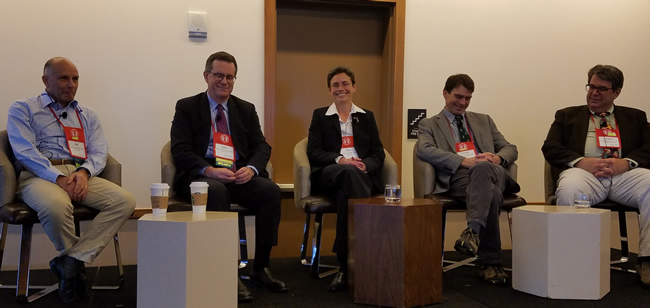
“Ask the Experts” Panel, sitting left to right: James A. DiNardo, MD; Dean B. Andropoulos, MD; Nina A. Guzzetta, MD; George M. Hoffman, MD; Francis X. McGowan, Jr., MD.
Later in the afternoon, CCAS attendees had the choice to attend a workshop of their choice or attend the “Ask the Experts” panel, a panel consisting of well-respected leaders in our field (listed above). Attendees were encouraged to submit topics for discussion online prior to the meeting, although the panel quickly took on a life of its own and meandered through a slew of topically relevant and controversial issues. The session was expertly moderated by Jumbo Williams (Stanford), who kept the conversation perfectly paced to focus on areas that required depth yet moving quickly enough to new topics. The 90 minutes flew by in a whirlwind of audience participation, expert opinion, and lively banter.
Brief examples of only a few of the topics include:
The session started with a debate about our current understanding of potential anesthesia-related neurotoxicity as applies to pediatric cardiac surgery. Recent FDA warnings suggesting that an increased duration of exposure to anesthetics may cause harm. Multiple studies over many years still reveal unequivocal results. How do hours added to anesthesia time with trainees affect patients and families’ concerns? It is important to engage everyone in the discussion, and become proficient in cases that may not require medications (e.g., MRI brain with feed and swaddle technique).
Infants usually need about half the dose of dexmedetomidine as older kids. There is less clearance, and care should be taken with dose escalation and with the ceiling effect. Most agreed that using dexmedetomidine as a sole anesthetic is essentially comparable to taking a nap, and must be used with caution in even minimally stimulating procedures.
Vasopressin and neonates: the pros, cons, and reasons therein were debated. There were several comments that inotropes, calcium, and vasoconstrictors were a necessary evil in pediatric cardiac perioperative care.
Inter-institutional collaboration to adopt best practice was discussed in depth. Collaborative process is not changing a single element – the entire system must come together. Important points are that institutions need to be cautious with adopting various piecemeal algorithms from seemingly successful institutions and instead focus on more global/inclusive strategies that work best within their system with regard, for instance, to coagulation management. The entire perioperative culture and specifics must be examined. Examples included pre- and perioperative fluid strategies and surgical technique variations (length of cases) and post-operative ICU fluid and blood product management.
Further examples and discussion were had regarding institutional variance in post-bypass coagulation management. For instance, the transfusion algorithm at Texas, which uses ROTEM, has shown to decrease waste of cryoprecipitate. Another comment was that infants less than 5 kg always receive platelets and cryoprecipitate post-bypass; cardiopulmonary bypass reduces platelets by 80%, and the rest are largely nonfunctional in neonates post bypass.
Institutional policies for addressing outside OR concerns from various departments. Most departments have a consultant attending or service to address logistical concerns for scheduling procedures or OR cases for adults with congenital cardiac disease. Examples include optimal timing for procedures, most appropriate physician to do case, and hospital availability with ICU beds. Must be a collaborative effort both within anesthesia departments and with various pediatric specialties.
Session VI: Workshops
In the second year of offering workshops during CCAS, a fifth workshop was added this year. All workshops were well attended, and reviews from those in attendance were uniformly positive and enthusiastic! A list of workshops and instructors follows:
- Cardiopulmonary Bypass
Richard Ginther, Jr., CCP, FPP; Molly Oldeen, CCP; Carrie Striker, DHEd MPS CCP FP - WORKSHOP: Extracorporeal Life Support: ECMO & VAD
Ron E. Angona, MS, CCP; Dan Hill, BS, RRT; Jodie Lantz, RN; Craig McRobb, CCP; Sana Ullah, MB, ChB, FRCA - WORKSHOP: Cardiac Morphology and 3D Models
Ryan Moore, MD; James P. Spaeth, MD; Gina Whitney, MD - WORKSHOP: Perioperative Management of Pacemakers
Manchula Navaratnam, MD; Jeffrey J. Kim, MD - WORKSHOP: Transesophageal Echocardiography
Wanda C. Miller-Hance, MD; Komal Kamra, MBBS; Pablo Motta, MD
Session VII: Professor Poster Rounds
Moderators: Dean B. Andropoulos, MD, MHCM; James A. DiNardo, MD; Nina A. Guzzetta, MD; George M. Hoffman, MD; Barry David Kussman, MB, BCh; Francis X. McGowan, Jr., MD; Peggy P. McNaull, MD; Mark D. Twite, MD, BCh
As is customary, the educational program ended with oral presentation of accepted abstracts. Attendance was excellent, as was the quality of selected abstracts again this year.
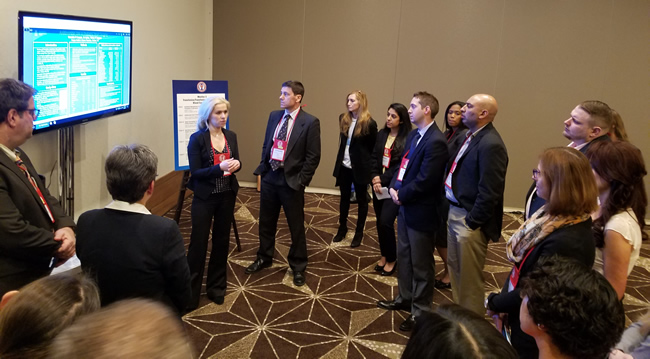
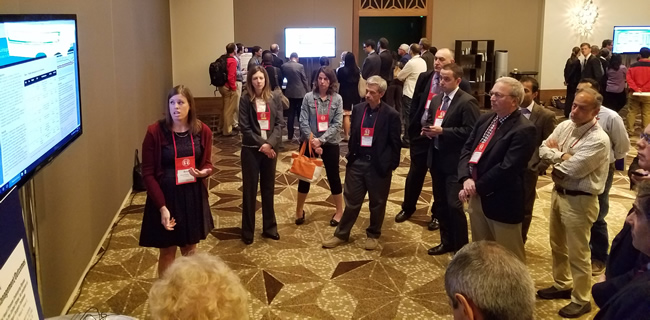
Professor Poster Rounds
Last but not least, the day ended with a wonderful reception, where old friends and new friends enjoyed time to socialize. For many, we look forward to what is sure to be another excellent meeting in Phoenix next year to visit again.


