


Bidirectional cavopulmonary anastamosis in a child with hypoplastic left heart syndrome and cystic fibrosis
By Sara L Pittenger, MD and Peggy P McNaull, MD
North Carolina’s Childrens Hospital, Chapel Hill, North Carolina
Case:
A 3.2 kg male infant of 39 weeks gestational age was admitted to our NICU following NSVD with a prenatal diagnosis of hypoplastic left heart syndrome. His initial newborn echo revealed mitral atresia, hypoplastic left ventricle, malaligned VSD, a well-developed aortic arch with a Type A interruption and a large PDA with right to left shunt. On day of life (DOL) 3 he underwent a modified Norwood procedure with repair of the aortic arch and a Sano systemic to pulmonary artery shunt with delayed sternal closure. He was ultimately extubated on post-operative day (POD) 6 at which time a routine bronchoscopy was performed which revealed pharyngeal collapse and laryngomalacia without any detectable vocal cord abnormalities – his lower airways were not examined. Shortly after extubation his routine neonatal screen revealed the diagnosis of delta-F508 homozygous cystic fibrosis (CF) which was confirmed with sweat chloride testing. Pediatric pulmonology was consulted for optimization of pulmonary function and management of pancreatic enzyme replacement therapy.
His postoperative course was complicated by severe feeding intolerance though secondary to his CF, reflux, and a strong family history of lactose intolerance. He ultimately underwent laparoscopic gastrostomy tube placement at 4 weeks of age. He also experienced recurrent desaturations and increased respiratory effort, at times requiring readmission to the PICU. Cardiac catheterization performed on DOL 81 revealed dynamic RV obstruction at the entrance of the Sano shunt and a significant improvement in arterial saturation when systemic blood pressure was increased. His medical management was subsequently optimized by decreasing his furosemide and increasing his propranolol doses in an effort to increase systemic pressure and minimize the apparent dynamic obstruction of the Sano shunt. Despite these interventions, he continued to have recurrent desaturations preventing discharge from the hospital. The decision was made following multidisciplinary collaboration to proceed with the second stage of his surgical palliation which was performed on DOL 93.
The patient was brought to the operating room, underwent an uneventful intravenous induction, and was nasally intubated. Lines were placed including a femoral central venous line as well as a radial arterial line. The neck was avoided as a site for central access. A single shot clonidine and morphine caudal anesthetic was performed for pain control and to facilitate the anticipated postoperative extubation. The patient tolerated test occlusion of the right pulmonary artery so the decision was made to proceed with the repair without utilizing CBP. An innominate vein to right atrial shunt was created to divert venous blood flow during SVC clamping and anastomosis. The patient was loaded with milrinone and an infusion was started in hopes of optimizing pulmonary vascular resistance. Upon completion of the SVC to PA anastomosis, the oxygen saturations fell to the mid 60% range on 40% FiO2. His O2 sats remained in the 67-70% range despite increasing the inspired concentration of oxygen.
The patient was sensitive to both volume and small doses of epinephrine, so an epinephrine infusion was started. He remained hemodynamically stable on these infusions and the sternum was closed. The CVP remained between 3-5 despite aggressive volume resuscitation and hemodynamic control. The milrinone was temporarily discontinued due to concerns of excessive systemic vasodilation and a vasopressin drip was ultimately started. A right internal jugular central line was placed to approximate transpulmonary pressures which were estimated to be 10-12mmHg. A postoperative TEE revealed low velocity unobstructed flow in the Glenn shunt and patency of the Sano shunt which was left intact to better facilitate pulmonary perfusion. The patient was transported to the PICU and was extubated POD 1 without complications. His vasopressin and epinephrine infusions were weaned off in the first 24 hours postoperatively. Milrinone was weaned by POD 2.
The remainder of his postoperative course was largely uneventful - he was started on 0.5 liters per minute nasal cannula in an effort to help decrease PVR. He was ultimately discharged home on DOL 104 on pancreatic enzyme supplementation, furosemide, omeprazole, aspirin, simethicone drops, and home O2.
Discussion:
Cystic fibrosis is the most common life-limiting inherited disorder in the Caucasian population. CF is inherited in an autosomal recessive pattern and has an incidence of 1 in 2500 live births among whites. CF is characterized by exocrine gland dysfunction resulting in pulmonary disease, pancreatic dysfunction, and abnormalities in electrolyte desorption. Despite its multisystemic impact, the majority morbidity and mortality associated with cystic fibrosis is contributed to pulmonary manifestations. Enhanced sodium absorption across airway epithelium and failure to secrete chloride and fluid into the airway lumen result in dehydration and thickened airway mucus. Resulting bronchociliary dysfunction leads to bronchial inflammation and chronic pulmonary infection. Long standing hypoxemia may ultimately cause irreversible parenchymal disease and pulmonary hypertension. Progressive respiratory failure may be further associated with cor pulmonale necessitating heart lung transplantation. While significant outcome improvements have resulted from early diagnosis and aggressive intervention, the median survival of a CF patient is still only into the third decade.
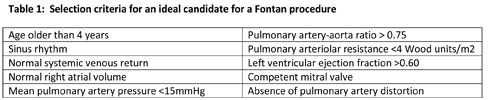
Hypoplastic left heart syndrome is the fourth most common congenital cardiac defect that is detected in the neonatal period and accounts for 7.5% of newborn CHD. HLHS was initially considered a fatal lesion until the development of the staged repair in the late 1970s. Bidirectional cavopulmonary anastomosis (Stage II) has since become the standard of care for palliation of various single-ventricle lesions in early infancy. The procedure is classically performed by 4-9 months of age when PVR approximates adult values and when limited blood flow from systemic to pulmonary shunts placed during the neonatal period no longer support adequate pulmonary blood flow. However, patient-specific criteria including worsening cyanosis, congestive heart failure, decreased function, and/or poor weight gain may influence timing of Stage II repair as with our patient. Outcomes following the Glenn operation are adversely affected by prolonged cardiopulmonary bypass time, elevated central venous pressure and transpulmonary gradient, and abnormal right ventricular morphology. Success of further repair via the Fontan procedure was initially outlined by Choussat’s “Ten Commandments” in 1977 and these basic principles can still be applied today (Table 1).
To our knowledge, this case is the second presented report of a child with both single ventricle physiology and cystic fibrosis. The combination of these two serious comorbidities presents many challenges in the perioperative setting. Poor pulmonary status from CF in the setting of cyanotic heart disease likely worsens hypoxemia and increases the risk of mucus plugging and resultant atelectasis. Together this contributes to an elevation of pulmonary vascular resistance which has been associated with decreased survival following Stage II repairs.
Additionally, inadequate nutrition associated with CF in the setting of pancreatic insufficiency is suboptimal for adequate development and weight gain. Resulting malnutrition may delay or complicate corrective surgery as optimization of the metabolic and nutritional status of a child with CHD may improve outcome in the immediate postoperative period.
The optimal anesthetic management of this patient is not truly known given the rarity of these combined conditions. Our efforts focused on optimizing his pulmonary performance through conservative ventilator strategies, attempting early extubation, and optimizing pulmonary blood flow. Cardiopulmonary bypass was also avoided in part to potentially minimize the resulting systemic and pulmonary inflammatory response associated with CPB and to allow for continued ventilation of the patient’s fragile lungs. Utilizing neuraxial anesthesia in the form of a single shot caudal anesthetic has been suggested to improve outcomes in Fontan patients and this technique may be extrapolated to Stage II repairs where pain-free spontaneous ventilation is desirable.
The ethical implications of this case bring to light a frequent problem in our health care system with our ever-increasing ability to provide complex medical care. Here, we present a profoundly complicated patient with severe cardiopulmonary disease. His survival associated with each condition is severely limited and it is fair to assume that his cardiac and pulmonary morbidities may ultimately necessitate transplantation. The resulting psycho-social, physical, and economic burden on this patient and his family will likely be profound and must be considered and fully communicated to the family as care ensues.
References:
- Feinstein JA, et al. Hypoplastic Left Heart Syndrome: Current Considerations and Expectations. Journal of the American College of Cardiology. 2012 Jan; 59(1): S1-S42.
- Kogon BE, Plattner C, et al. The bidirectional Glenn operation: A risk factor analysis for morbidity and mortality. The Journal of Thoracic and Cardiovascular Surgery. 2008; 136: 1237-42.
- Lofland GK. The enhancement of hemodynamic performance in Fontan circulation using pain free spontaneous ventilation. Eur J Cardiothorac Surg. 2001 Jul; 20(1):114-8.
- Rosenstein BJ, Zeitlin PL. Cystic fibrosis. Lancet. 1998; 351: 277-82.
Stuth EAE, Stucke AG, et al. Complete staged palliation of hypoplastic left heart syndrome in a child with cystic fibrosis. Paediatric Anaesthesia. 2003; 13: 345-348.
